-
email: michele@starbounding.com
" For similar levels of heart rate and oxygen consumption, the magnitude of the biomechanical stimuli is greater with jumping on a trampoline than with running, a finding that might help identify acceleration parameters needed for the design of remedial procedures to avert de-conditioning in persons exposed to weightlessness,"
Look how the History of rebounding evolved leading to NASA Research encouraging mini trampoline exercise

"Michele Wilburn - Undisputed Queen of the Mini trampoline" ~ Daily Telegraph UK
NASA research studies for mini trampolines
You Have Fun Exercising on a Mini trampoline Gravity does the Work!
Gravity works in your favour with rebounding exercise workouts.
NASA research encouraged rebounding exercise on mini trampolines from the late 1970's promoting rebounding as the most 'efficient and effective exercise yet devised by man.'
In the late 1970's a team of NASA scientists were hard at Work!
Mini trampoline Rebounding Evolutions & NASA research
NASA
SCIENTISTS carried out extensive research into
rebounding exercise, seeking the best method to prevent astronauts
from speedily deconditioning
in space! They were
A team of pioneering doctors and journalists,
including world famous trampolinist Dr Albert
Carter, and lymphologist Dr Samuel West, set
about educating the masses.
NASA Studies concluded that Rebounding on a mini trampoline enabled you to make the most of the additional G-Force values, combining the additional forces of acceleration and deceleration in the vertical plane, without shock or stress impact loading on your body. This was in effect like lining up 3 power horses at once.
News of the NASA scientists studies leaked out. As word got around people jumped on the bandwagon and began to bounce on mini trampolines. Meanwhile astronauts began bouncing off the walls of their space craft! Their cells responded favourably and defied Gravity at all odds!
It was over thirty-five years ago, on a trip back to visit my parents in New Zealand, and a few years after those first NASA revelations that I discovered my first mini trampoline rebounder - in fact an anti-static, 'mean mini trampoline machine' the NZ RH48 lymphaciser rebounder, designed by a brilliant manufacturer by the name of Ged Alward. It was in the home of a friend I visited in New Zealand. She was using the lymphaciser for just that - a certified lymphologist sahe taught me to use the lymphatic reflex zone health bounce.
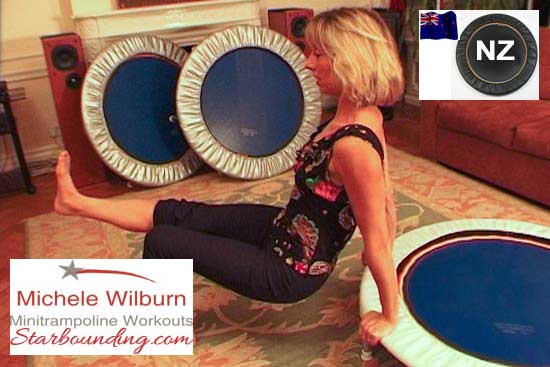
I was so excited as I bounced. I was immediately hooked - but quickly realized as a fitness professional that the world needed more instruction. I realised people were not structuring programmes correctly - not mobilizing, warming up, stretching out. I discovered the power of the mini trampoline as a home gym. The soft mat cushioned knees and back when sculpting. The knees are protected as you kneel on the mat. The rim provides a bar for support. It really is yours to play with!
One of those EUREKA moments in life! Little did I know that this little ring of metal with a springy mat was going to become such an important tool in my career as a fitness lifestyle and wellbeing coach. Living in London, UK at the time working as a fitness, exercise, and lifestyle coach I'd been lucky to instruct at some of the most prestigious studios in the world. But bouncing was definitely not on anyone's agenda at the time! Now it's all the rage!
So what did the NASA research into rebounding exercise reveal?
The NASA Astronaut
Study into the use of Mini trampolines for
exercise was motivated mainly by the fact that since man had
been exploring space, astronauts had been faced
with the effect of zero gravity, weakening their bones and tissues,
through lack of stress upon their body cells. For this reason NASA scientists carried out
the first-ever research into using a trampoline,
with evidence surfacing to suggest that
rebounding provides superior exercise.
In
the past twenty years nearly every commercial
company selling rebounders or a mini trampoline
rebounding concept refers to the NASA research
and reports on rebounding exercise. The
concept of rebounding on mini trampolines was
consequently introduced as 'rebounding exercise'
around forty years ago, citing NASA research as
revealing that mini trampoline exercise provided
' the most efficient and effective form of
exercise ever devised.
Mini trampoline or Treadmill
Four scientists, A,
Bhattacharya, E. p, McCutcheon, E. Shvariz, and
J, E. Greenleaf, secured the assistance of eight
men between the ages of 19 and 26 to each walk,
jog, and run on a treadmill. Operated
at four speeds, they then jumped on a standard
sized trampoline at four different heights to
compare the difference between the two modes of
exercise. The trampoline testing was conducted
at least a week after the treadmill testing.
By the mid 80's my personal destiny was set! From my base in London in the UK for a few years I researched and worked closely with the most amazing practitioners and pioneers on the planet, not only in the fields of fitness but in many arenas of wellbeing and lifestyle.
I returned to New Zealand to sit on the beach with a thermal typewriter - nobody had computers in those days! Starbound, my mini trampoline workout system was born!
Five Star Fitness with a bounce! Rebounder exercise workout plans using mini trampolines as a central focus of support for transformation in numerous healthy lifestyle, wellbeing and fitness goals.
An exclusive system of mini trampoline exercise based on Starbound sequential skills, essential for safe performance and posture. I returned to London and published my work, before embarking on a number of world tours. They were exciting days -in the 80s and 90s, and definitely filled with bounce! I became one of the earliest pioneers to present actual mini trampoline exercise workouts and lifestyle plans.
A BRIEF TIMELINE OF MINI TRAMPOLINE REBOUNDING EXERCISE
Rebounding exercise recharges your energy levels, strengthen all body cells, muscles, organs and body processes. Albert Einstein said: " Life is like riding a bicycle - To Keep your balance, you must KEEP MOVING!"
PEOPLE HAVE ALWAYS BOUNCED.
Leaping and rebounding is a natural act tapped by the young in their play, forming an important part of recreation and physical education. From early childhood, babies bounce before they walk, with bouncing an instinctive element of spontaneous and organized play.
It's easier to bounce on a mini trampoline than a bed! Our real history of rebounding began bouncing as babies on parent's knees and for most of us - the side of the cot. Long before the invention of the mini trampoline rebounder, bouncing has always been a natural act!
-
As far back as the middle ages, travelling acrobats specialized in plank leaping, jumping over a variety of objects, including each other.
-
Eskimos stretched walrus skins between stakes on the ice, rebounding zealously off and upon them.
-
Inspired by trapeze artists who end their acts dropping into a net George Nissen set about designing the first trampoline around 1936
-
Throughout World War Two the American Armed Forces adopted rebounders equipment to aid in the development of aerial orientation, co-ordination and motor skills.
In 1936, when George Nissen invented the trampoline he considered it as a tool for gymnasts. George was 86 years old when the sport of trampolining was finally and officially recognized at the 2000 Sydney Olympic games.
The first mini’ trampoline was created by Ed Russell in 1938 and finally patented in 1975 by Victor Green.
Between 1981 and 1984 rebounding exercise became very popular in the USA. Over one million rebounders sold a year, until the fad faded by 1985. It was in 1987 that I was introduced to a lymphaciser rebounder in New Zealand and began to develop my Starbound workouts in the UK and Europe.
1938 - The first "MINI trampoline" DESIGNED by Ed Russell; he left his ideas and prototype with Victor Green.
1975 - The mini trampoline was patented by Victor Green. leading by the end of the year to five American companies manufacturing rebounders
1977 - Albert E Carter published "Rebound to Better Health" and then later in the year Carter publishes his first full-size book, "The Miracles of Rebound Exercise". Several studies give scientific validation to Carter's claim that rebounding was the most efficient and effective form of exercise ever devised by man
Dr Samuel West enlightened the western world in regards to healting, the importance of lymphatic circulation, cellular metabolism, plasma proteins,among mnay other concepts that helped an understanding of the lymphatic fluid systems in relation to rebounding
1978 - Carter and Dr. Harry Sneider worked together - Schneider developed "Aerobic Resistive Rebounding" using 1-3 pound sand bags while rebounding for greater strength. Sneider and his family introduce rebounding to Jack LaLanne and many other athletes and celebrities.
1981 - Dr Kenneth Cooper's Institute of Aerobic Research finds rebounding gets 25% more strength gains than jogging.
By the end of 1981 The Rebounding Craze
turned into a fad with over 100 US firms
competing for the rebound exercise market.
Al Carter's National Institute of Rebounding
and Health sold research literature to the
manufacturers. Such intense competition
began to reduce both rebounder price and the
quality.
-
1982 - An estimated $72 billion dollars spent on rebounders - most of them inferior quality.
-
1983 - Nearly 2 million rebounder units sold before the fad fizzled out in America.
1984 - Al Carter was invited to Hong Kong to work with city engineers to design the first folding rebounder. The half fold rebounder thus created prevents a city wide strike by the police and firemen who required a form of exercise that they could do during their shifts. After the Fad Faded... Meanwhile back in the states enthusiasm for rebounding is as broken down as all the cheap, poorly made rebounders. Rebounding goes underground. But endorsements from experts and celebrities keep a candle of awareness burning
1986 - Michele Wilburn began documenting the Starbound system of rebounding and lifestyle plans introducing plans in NZ, Australia, UK and Europe - Tony Robbins endorses rebounding in his book, "Unlimited Power". Leslie Kenton, internationally acclaimed author provided numerous testimonies to the power of rebounding.
Needak began to manufacture quality non-fold and half-fold rebounders in Nebraska.
1987 - Harvey and Marilyn Diamond endorsed rebounding in their "Fit for Life" books.
1988 - Al Carter published the "NEW Miracles of Rebound Exercise".
1989 - Dr. Morton Walker publishes "Jumping for Health".
1991 - Linda Brooks studies with Al Carter to become a certified reboundologist. Sylvia Ortiz produces another video, "Rebound Aerobics for Kids" starring Al Carter's son Darren and friends.
-
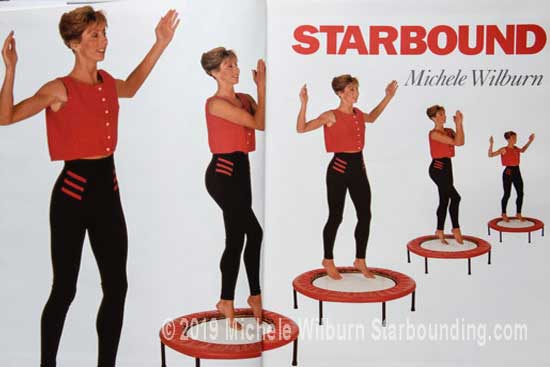
1992 - The first Starbound book, written by Michele Wilburn, was published in London UK.
- Holly Anderson produced her first video, "AirObics". -
1993 - Needak introduces fat, muscle-shaped rebounder springs and produces the first "soft bounce" rebounders. Soft bounce units have since revolutionized the rebounding industry as they provide a much more enjoyable and low impact bounce.
-
1995 - Linda Brooks published her book, "Rebounding to Better Health".
-
1996 - Life Source International, headed by renown lymphologist, Judy Taylor, begins to manufacture rectangular shaped Lympholines in southern California. The Lympholine rebounder with its second set of "suspension style" legs was a quantum step forward in bouncing experience.
-
Four more videos debut: Dave Hall - "Rebound to Health" Carol Brophy - "Carol's Health Bounce" Holly Anderson - "airObics phase II"
Linda Brooks - "Bounce Before You Jump" -
1999 - Dave Hall started the Center for Cellular Health and created his half-fold model
-
JB Berns published his book, "Urban Rebounding".
-
The New Millenium... 2000 - The "Urban Rebounding" video by JB Berns was produced. Berns, a martial arts instructor, developed a style of rebound exercise influenced by Asian theories of wellness.
"Keep on Rebounding" video starring both Holly Anderson and Darren Carter is produced by ReboundAIR. -
JB Berns produces more Urban Rebounding videos - Michele Wilburn first introduced The Starbound Workout videos and - presenting on UK television and presenting worskhop seminar and courses at the Centre for Transformation in London UK.
-
2003 - Five Urban Rebounding instructors including JB Berns produce 20 new VHS videos; several of the videos are also made in DVD format. Urban Rebounding has effectively doubled the number of rebounding videos.
Use best quality rebounders for Starbound rebounding exercise mini trampoline workouts with DVD videos and Starbound mini trampoline books - bounce safely and with style. My Starbound programmes introduced sequential rebounding exercise skills alongside mini trampoline resolution plans - how to use you mini trampoline to help achieve health, fitness and lifestyle goals!
Holistic Mini Trampoline Fitness
NASA had been considering using trampoline exercise to help counteract astronauts’ loss of bone mass and weakness caused by space flight. They wanted to find the best form of exercise that could be used to train their astronauts in space.
Treadmills have long been used for health and fitness research. But trampolines had never been researched before. This study was conducted by the Biomechanical Research Division, NASA-Ames Research Center in Moffett Field, California, with the Wenner-Gren Research Laboratory of the University of Kentucky, Lexington.
NASA scientists compared measurements on 8 young men performing running on a treadmill, as well as jumping on a trampoline.
They tested their: Pulse – before and after exercising as well as Oxygen intake during exercise. They also measured the G-Forces at the ankles, lower back and forehead.
The NASA Scientists Discovered Trampoline Exercise Was 2-4 Times More Efficient Than Treadmill Running!
What this
means is that
when you jump on
the very
forgiving
surface of a
properly
constructed
trampoline, your
entire body
shares the
G-force impact. This is the
critical and
unique benefit
of rebounding,
that the NASA
study confirmed;
When you
rebound, the up
and down
movements to the
cushioning
surface, the
forces of
acceleration,
deceleration and
gravity are
lined up in one
plane of
movement, all at
the same time. This is quite a
contrast from
running- where
your feet,
ankles, and legs
bear most of the
force and
fatigue.
In the NASA
study, the
G-force on the
ankles was more
than twice than
on the back and
forehead. NASA
also found that
the rate of
oxygen
consumption was
twice as
efficient as
treadmill
running!
This is
a very good
thing because
every cell of
your entire body
gets quality
exercise stress
to build
strength - without trauma
to any one part
of the body.
The
intense,
pounding trauma
of running can
cause injuries
to the feet,
legs, knees,
hips and back-
and this is
ELIMINATED with
rebounding.
Their study revealed that bouncing on a trampoline was an extraordinarily efficient form of exercise- significantly better than running, to counteract some of the negative effects of space travel on astronauts.
Their findings also helped us understand why rebounding is an outstanding exercise for the elderly and even some handicapped people: low impact, efficient, safe and great for building cellular strength.
NASA
research into
rebounding
exercise,
research mini
trampolines,
mini trampoline
research by
NASA, why
rebounder
exercise was
praised by NASA,
what did NASA
research suggest
about mini
trampoline
exercise, mini
trampoline
exercise,
research
rebounder
exercise,
exercise
rebounder
research, NASA
research mini
trampoline
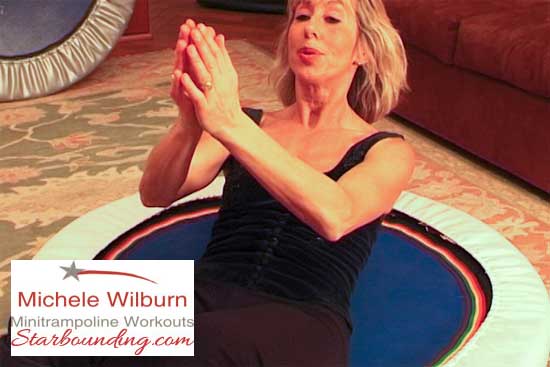
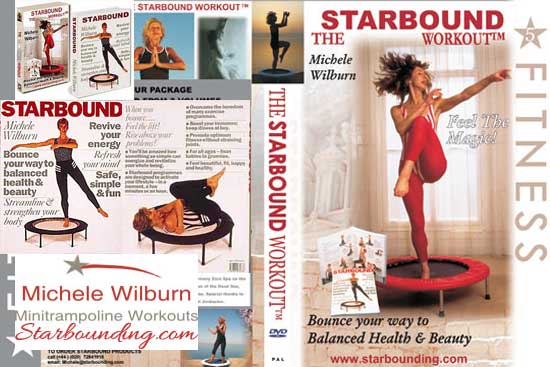
The Starbound Workout mini trampoline exercises on video and in my rebounder exercise book provide numerous mini trampoline rebounding exercise formats. I have developed Starbound as a complete system of mini trampoline exercises, over the past thirty years, to provide the worlds first fully comprehensive rebounding programmes for health, healing, and fitness.
The exercise workouts I have developed are
presented in my Starbound book and Starbound Workout
mini
trampoline
videos
NASA scientists
research results confirmed the power and fitness
benefits released by bouncing on trampolines - great
news for astronauts! Rebounding exercise with NASA
research on rebounding mini trampoline exercise workouts
using rebounder exercise for strength and fitness.
NASA research encouraged rebounding exercise from the late 1970's promoting rebounding as the most efficient and effective exercise yet devised by man.
NASA carried out the first ever research into using a mini trampoline, to conclude that rebounding exercises provide a more effective and efficient form of exercise than jogging.
STARBOUND SHOP {for Mini Trampoline Exercise}
Whatever your age, fitness level, and goals, I design Starbound mini trampoline workouts to help you reap numerous benefits of rebounding exercises for health and fitness. It's easy. You learn to bounce safely and with style. You look and feel better!
- All
- Central Shop Admin
- Select World Regions
- Products and Services Index
_1.jpg)


STARBOUND MINI TRAMPOLINE EXERCISE SHOPPING
PRODUCTS INDEX ~ Main Products Index ~ Choosing rebounders ~ Quality mini trampolines ~ Books DVD Videos ~ Shop best Mini trampoline ~ Shop Rebounder Parts ~ Shop Fit Kit Essentials ~ Shop Health and Beauty ~ Shop Special Offers ~ Rebounder Classification ~ Mini trampoline Specs ~ Mini trampoline classification ~ Services Overview ~ Workout Sessions ~ Online Coaching ~ Holistic Fitness Retreats
BUY A MINI TRAMPOLINE ~ Mini trampoline overview ~ USA AND CANADA ~ Australia Rebounders ~ NZ Mini trampoline ~ UK Mini trampoline ~ Mini trampoline Europe ~ Mini trampoline World ~ Choosing Rebounders ~ A Quality mini trampoline ~ Reducing stress impact ~ Electromagnetic and static electricity ~ Lymphaciser mini trampoline rebounders ~ Health Circulator rebounders
BOOKS
VIDEOS DVD ~
Books Videos USA Books Videos AU
~
Books Videos NZ
~
Books Videos UK
~
Books Videos Eu
~
Books Videos World
~ View
content reviews for Starbound mini trampoline video
and productions ~
Pal & NTSC Country Guides
FIT KIT ESSENTIALS
~ Shop
Canada and USA FIT KITS ~
Shop Au FIT KIT
~
Shop FIT KIT NZ
~ Shop FIT KITS UK
~
Shop FIT KIT EU
~
Shop FIT KITS World
Fit Kit Essentials ~ Fit Kits ~ MIni Balls ~ Flexibar Pro ~ Gymstick ~ Hand Weights ~ Exercise Bands ~ Exercise Balls ~ Sports Watch Monitors ~ Cross Training ~ Water Weights ~ Mini trampoline Skipping ~ Workout mats
HEALTH AND BEAUTY ~ Health and Beauty Canada and USA ~ Health and Beauty Au ~ Health and Beauty NZ ~ Health and Beauty UK ~ Health and Beauty EU Health Beauty World
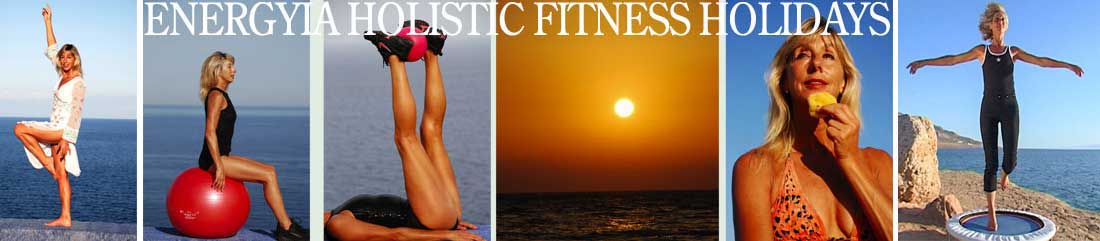
Starbound Energyia Holistic Fitness Holiday Retreats
Join me for Fun in the Sun with my Starbound Energyia Holistic Fitness Holiday Retreats
'Energyia Holistic Fitness exercise Holiday retreats' Mini trampoline rebounding exercise tuition is included in Energyia Holistic Holiday exercise retreats along with Energyia Kinetics - my new release of exercise workouts include yogaflow and pilates based exercise workouts interspersed with mini trampoline workouts.